

Randomization in Simulation – AMR Navigation#
Example of using Isaac Sim and Replicator to capture synthetic data from simulated environments (AMR Navigation).
Learning Objectives#
The goal of this tutorial is to demonstrate how to setup an Isaac Sim simulation scenario together with the omni.replicator extension to capture synthetic data using diverse randomization techniques.
In this tutorial you:
Implement scene randomizations using USD / Isaac Sim APIs:
Randomize poses of assets in the scene
Switch between different background environments
Collect synthetic data at specific simulation events with Replicator
Create and destroy render products on the fly to improve runtime performance
Create and destroy Replicator capture graphs within the same simulation instance
Prerequisites#
Familiarity with USD / Isaac Sim APIs for scene creation and manipulation.
Familiarity with omni.replicator and its writers.
Basic understanding of OmniGraph for the navigation implementation.
Running simulations as Standalone Applications or via the Script Editor.
Scenario#
This tutorial uses the Nova Carter robot equipped with an OmniGraph navigation stack, notably without collision avoidance features. The navigation stack constantly drives the robot towards a designated Xform target (<..>/targetXform), positioned at the location of the randomized objects of interest. As the robot comes in the proximity of the object of interest, a synthetic data generation (SDG) pipeline is triggered to capture data from its two main camera sensors. After the data is captured the objects of interest are re-randomized and the simulation continues. After a certain number of frames (env_interval) the background environment is changed as well. After num_frames the application terminates.
The use_temp_rp flag is used to provide an option to use temporary render products to improve the runtime performance. This speeds up the simulation by only using the render products when capturing the data, thus avoiding the overhead of rendering the sensor views when not capturing data.
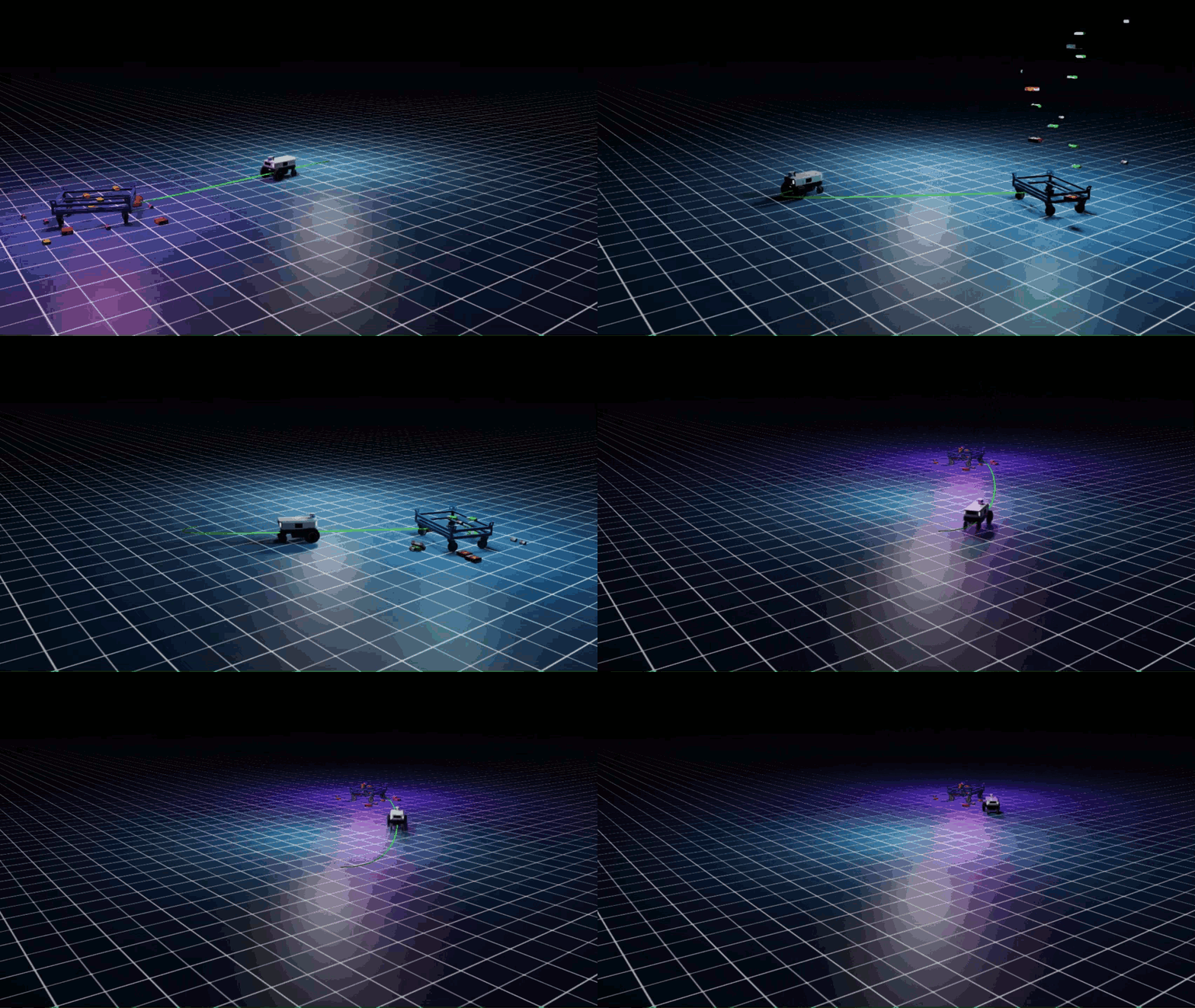
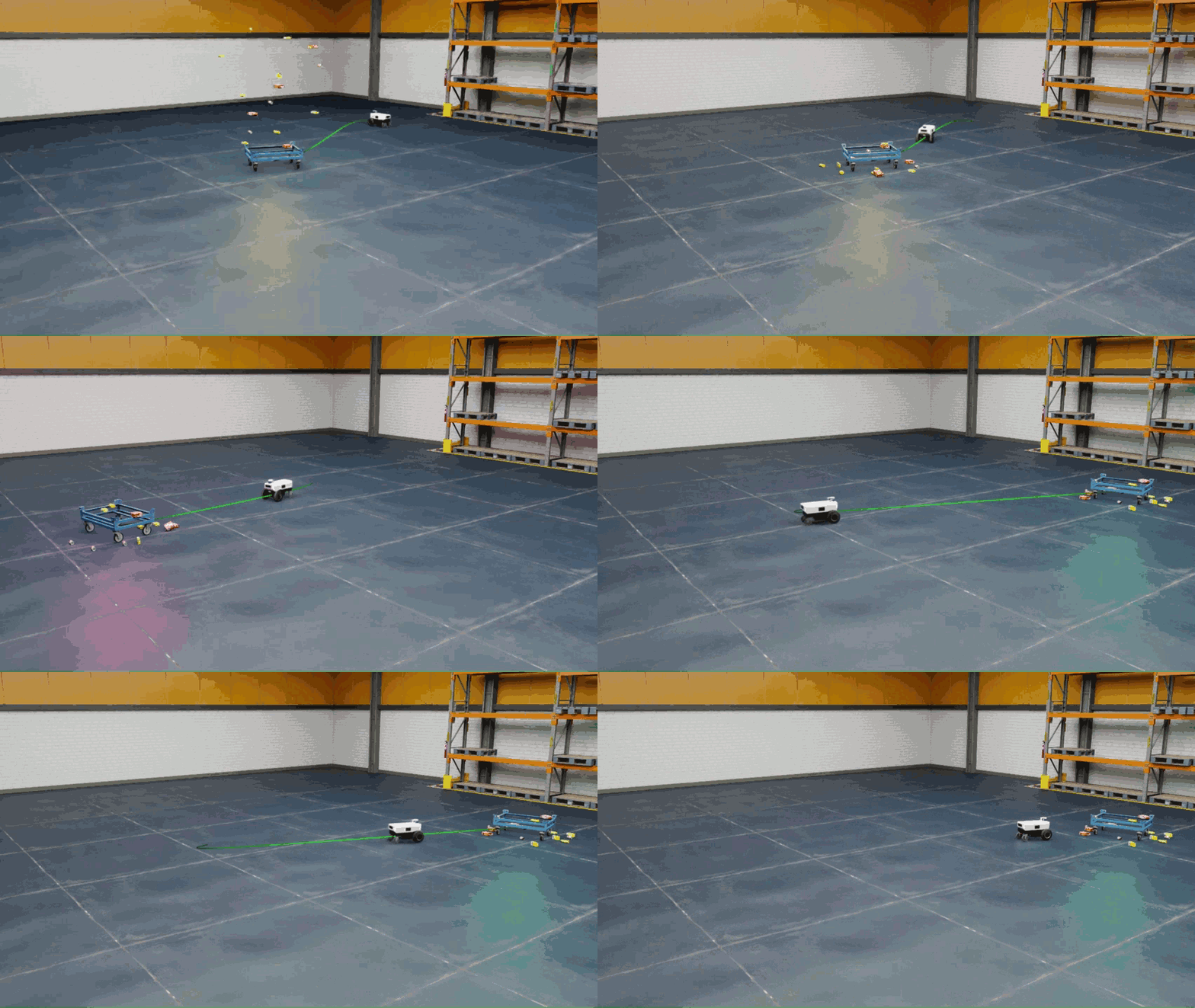
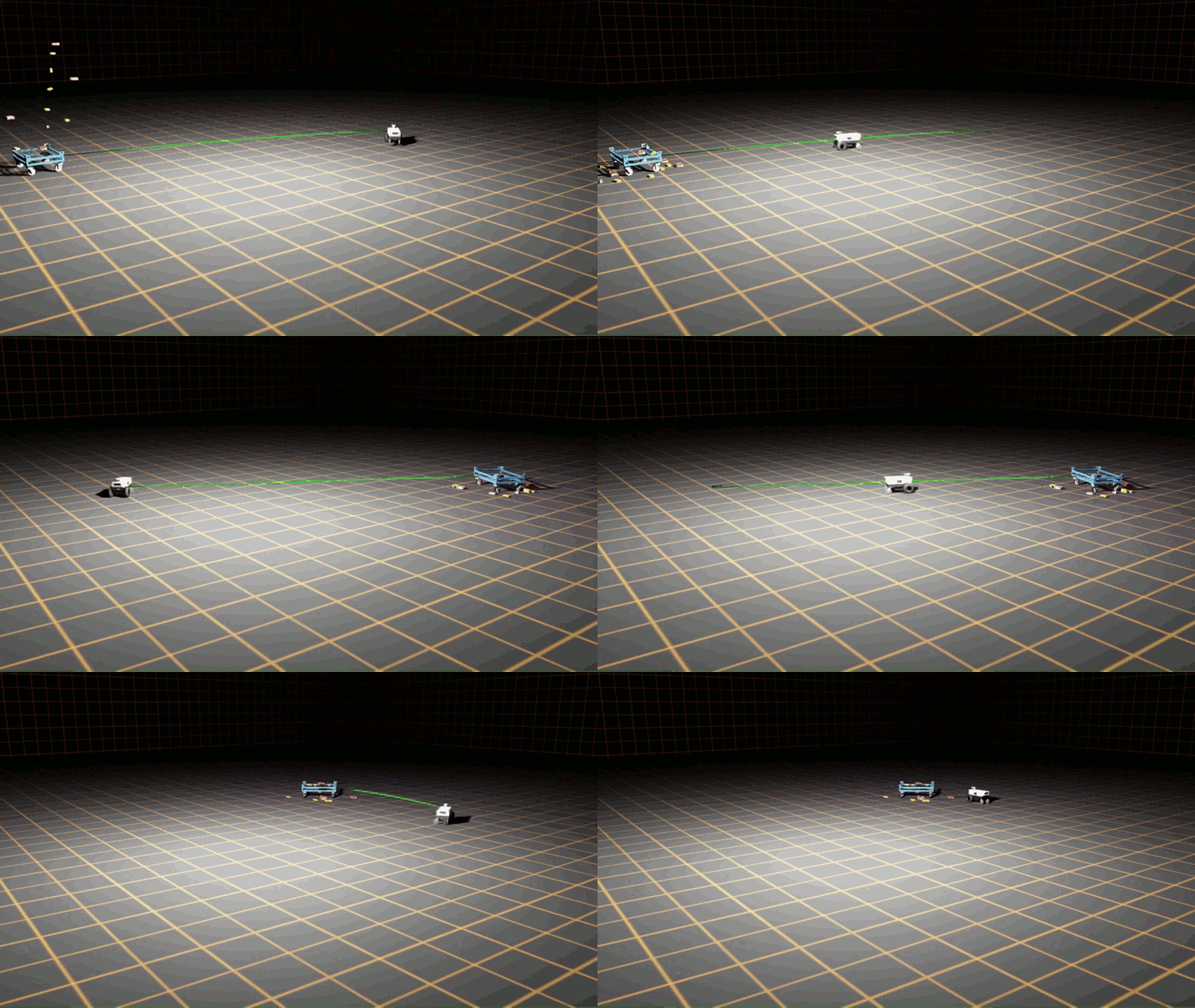
The scenario uses the left and right camera sensors of Nova Carter (<..>/stereo_cam_<left/right>_sensor_frame/camera_sensor_<left/right>) to collect LdrColor (rgb) annotator data using Replicator. By default, the data is written to <working_dir>/_out_nav_sdg_demo and runs for num_frames=9 iterations.
Furthermore, it changes the background environment every env_interval=3 captured frames. By default the tutorial cycles through DEFAULT_ENV_URLS; an entry of None creates a generic environment under /Environment using a Replicator dome light and a collider-enabled plane instead of loading a USD environment. The use_temp_rp flag can be used to optimize performance by disabling the sensor render products during simulation and temporarily enabling them during data capture.
The following image provides an illustration of the resulting data from the various environments.

Implementation#
The following section provides an overview and explanation of the implementation and examples on how to run the demo.
To run the example as a standalone application, use the following command to execute the provided script. The script also accepts several optional arguments to customize its behavior (on Windows use python.bat instead of python.sh):
./python.sh standalone_examples/replicator/amr_navigation.py
Arguments include:
--use_temp_rpflag to use temporary render products (default: False)--num_framesthe number of frames to be captured (default: 9)--env_intervalthe capture interval at which the background environment is changed (default: 3)--env_urlsreplacesDEFAULT_ENV_URLSentirely. UseNonefor the generic environment
For example, to run the application with all the arguments:
./python.sh standalone_examples/replicator/amr_navigation.py --use_temp_rp --num_frames 9 --env_interval 3
Standalone Script
"""Generate synthetic data from an AMR navigating to random locations."""

from isaacsim import SimulationApp

simulation_app = SimulationApp(launch_config={"headless": False})

import argparse
import builtins
import os
import random
from itertools import cycle

import carb.eventdispatcher
import carb.settings
import omni.client
import omni.replicator.core as rep
import omni.timeline
import omni.usd
import omni.usd.commands
from isaacsim.core.utils.stage import create_new_stage
from isaacsim.storage.native import get_assets_root_path
from pxr import Gf, UsdGeom

DEFAULT_ENV_URLS = [
    "/Isaac/Environments/Grid/default_environment.usd",
    "/Isaac/Environments/Simple_Warehouse/warehouse.usd",
    "/Isaac/Environments/Grid/gridroom_black.usd",
    None,
]


def _parse_env_url_arg(env_url: str) -> str | None:
    """Parse CLI environment arguments, where None/null selects the generic environment."""
    return None if env_url.lower() in {"none", "null"} else env_url


parser = argparse.ArgumentParser()
parser.add_argument("--num_frames", type=int, default=9, help="The number of frames to capture")
parser.add_argument("--env_interval", type=int, default=3, help="Interval at which to change the environments")
parser.add_argument(
    "--env_urls",
    nargs="+",
    type=_parse_env_url_arg,
    default=None,
    help="Replace DEFAULT_ENV_URLS entirely. Use None for the generic environment.",
)
parser.add_argument("--use_temp_rp", action="store_true", help="Create and destroy render products for each SDG frame")
args, unknown = parser.parse_known_args()


class NavSDGDemo:
    """Demonstration of synthetic data generation using an AMR navigating towards a target."""

    CARTER_URL = "/Isaac/Samples/Replicator/OmniGraph/nova_carter_nav_only.usd"
    DOLLY_URL = "/Isaac/Props/Dolly/dolly.usd"
    PROPS_URL = "/Isaac/Props/YCB/Axis_Aligned_Physics"
    LEFT_CAMERA_REL_PATH = "sensors/front_hawk/left/camera_left"
    RIGHT_CAMERA_REL_PATH = "sensors/front_hawk/right/camera_right"
    ENVIRONMENT_SCOPE_PATH = "/Environment"

    def __init__(self) -> None:
        """Initialize the navigation SDG demo with default values."""
        self._carter_chassis = None
        self._carter_nav_target = None
        self._dolly = None
        self._dolly_light = None
        self._props = []
        self._cycled_env_urls = None
        self._env_interval = 1
        self._timeline = None
        self._timeline_sub = None
        self._stage_event_sub = None
        self._stage = None
        self._trigger_distance = 2.0
        self._num_frames = 0
        self._frame_counter = 0
        self._writer = None
        self._out_dir = None
        self._render_products = []
        self._use_temp_rp = False
        self._in_running_state = False

    def start(
        self,
        num_frames: int = 10,
        out_dir: str | None = None,
        env_urls: list[str | None] | None = None,
        env_interval: int = 3,
        use_temp_rp: bool = False,
        seed: int | None = None,
    ) -> None:
        """Start the SDG demo with the given configuration."""
        print(f"[SDG] Starting")
        if seed is not None:
            rep.set_global_seed(seed)
            random.seed(seed)
        selected_env_urls = env_urls if env_urls is not None else DEFAULT_ENV_URLS
        self._num_frames = num_frames
        self._out_dir = out_dir if out_dir is not None else os.path.join(os.getcwd(), "_out_nav_sdg_demo")
        self._cycled_env_urls = cycle(selected_env_urls)
        self._env_interval = env_interval
        self._use_temp_rp = use_temp_rp
        self._frame_counter = 0
        self._trigger_distance = 2.0
        self._load_env()
        self._randomize_dolly_pose()
        self._randomize_dolly_light()
        self._randomize_prop_poses()
        self._setup_sdg()
        self._timeline = omni.timeline.get_timeline_interface()
        self._timeline.play()
        self._timeline_sub = carb.eventdispatcher.get_eventdispatcher().observe_event(
            event_name=omni.timeline.GLOBAL_EVENT_CURRENT_TIME_TICKED,
            on_event=self._on_timeline_event,
            observer_name="amr_navigation.NavSDGDemo._on_timeline_event",
        )
        self._stage_event_sub = carb.eventdispatcher.get_eventdispatcher().observe_event(
            event_name=omni.usd.get_context().stage_event_name(omni.usd.StageEventType.CLOSING),
            on_event=self._on_stage_closing_event,
            observer_name="amr_navigation.NavSDGDemo._on_stage_closing_event",
        )
        self._in_running_state = True

    def clear(self) -> None:
        """Reset all state variables and unsubscribe from events."""
        self._cycled_env_urls = None
        self._carter_chassis = None
        self._carter_nav_target = None
        self._dolly = None
        self._dolly_light = None
        self._timeline = None
        self._frame_counter = 0
        self._stage_event_sub = None
        self._timeline_sub = None
        self._clear_sdg_render_products()
        self._stage = None
        self._in_running_state = False

    def is_running(self) -> bool:
        """Return whether the SDG demo is currently running."""
        return self._in_running_state

    def _is_running_in_script_editor(self) -> bool:
        """Return whether the script is running in the Isaac Sim script editor."""
        return builtins.ISAAC_LAUNCHED_FROM_TERMINAL is True

    def _on_stage_closing_event(self, e: carb.eventdispatcher.Event):
        """Handle stage closing event by clearing state."""
        self.clear()

    def _load_env(self) -> None:
        """Create a new stage and load environment, robot, dolly, light, and props."""
        create_new_stage()
        self._stage = omni.usd.get_context().get_stage()
        assets_root_path = get_assets_root_path()
        rep.functional.physics.create_physics_scene(
            "/PhysicsScene", enableCCD=True, broadphaseType="MBP", enableGPUDynamics=False
        )

        # Environment
        self._load_environment(next(self._cycled_env_urls))

        # Nova Carter
        rep.functional.create.scope(name="NavWorld")
        carter = rep.functional.create.reference(
            position=(0, 0, 0),
            rotation=(0, 0, 0),
            usd_path=assets_root_path + self.CARTER_URL,
            parent="/NavWorld",
            name="CarterNav",
        )

        # Iterate children until targetXform (for navigation target) and chassis_link (for current location) are found
        for child in carter.GetChildren():
            if child.GetName() == "targetXform":
                self._carter_nav_target = child
                break
        for child in carter.GetChildren():
            if child.GetName() == "chassis_link":
                self._carter_chassis = child
                break

        # Dolly
        self._dolly = rep.functional.create.reference(
            position=(0, 0, 0),
            rotation=(0, 0, 0),
            usd_path=assets_root_path + self.DOLLY_URL,
            parent="/NavWorld",
            name="Dolly",
        )

        # # Add colliders to the dolly and its geometry primitives
        for desc_prim in self._dolly.GetChildren():
            if desc_prim.IsA(UsdGeom.Gprim):
                rep.functional.physics.apply_rigid_body(desc_prim)

        # Light
        self._dolly_light = rep.functional.create.sphere_light(
            position=(0, 0, 0),
            intensity=250000,
            radius=0.3,
            color=(1.0, 1.0, 1.0),
            parent="/NavWorld",
            name="DollyLight",
        )

        # Props
        props_urls = []
        props_folder_path = assets_root_path + self.PROPS_URL
        result, entries = omni.client.list(props_folder_path)
        if result != omni.client.Result.OK:
            carb.log_error(f"Could not list assets in path: {props_folder_path}")
            return
        for entry in entries:
            _, ext = os.path.splitext(entry.relative_path)
            if ext == ".usd":
                props_urls.append(f"{props_folder_path}/{entry.relative_path}")

        cycled_props_url = cycle(props_urls)
        for i in range(15):
            prop_url = next(cycled_props_url)
            prop_name = os.path.splitext(os.path.basename(prop_url))[0]
            path = f"/NavWorld/Props/Prop_{prop_name}_{i}"
            prim = self._stage.DefinePrim(path, "Xform")
            prim.GetReferences().AddReference(prop_url)
            self._props.append(prim)

    def _randomize_dolly_pose(self) -> None:
        """Set random dolly position ensuring minimum distance from Carter."""
        min_dist_from_carter = 4
        carter_loc = self._carter_chassis.GetAttribute("xformOp:translate").Get()
        for _ in range(100):
            x, y = random.uniform(-6, 6), random.uniform(-6, 6)
            dist = (Gf.Vec2f(x, y) - Gf.Vec2f(carter_loc[0], carter_loc[1])).GetLength()
            if dist > min_dist_from_carter:
                self._dolly.GetAttribute("xformOp:translate").Set((x, y, 0))
                self._carter_nav_target.GetAttribute("xformOp:translate").Set((x, y, 0))
                break
        self._dolly.GetAttribute("xformOp:rotateXYZ").Set((0, 0, random.uniform(-180, 180)))

    def _randomize_dolly_light(self) -> None:
        """Position light above dolly with random color."""
        dolly_loc = self._dolly.GetAttribute("xformOp:translate").Get()
        self._dolly_light.GetAttribute("xformOp:translate").Set(dolly_loc + (0, 0, 3))
        self._dolly_light.GetAttribute("inputs:color").Set(
            (random.uniform(0, 1), random.uniform(0, 1), random.uniform(0, 1))
        )

    def _randomize_prop_poses(self) -> None:
        """Stack props above the dolly with random horizontal offsets."""
        spawn_loc = self._dolly.GetAttribute("xformOp:translate").Get()
        spawn_loc[2] = spawn_loc[2] + 0.5
        for prop in self._props:
            prop.GetAttribute("xformOp:translate").Set(spawn_loc + (random.uniform(-1, 1), random.uniform(-1, 1), 0))
            spawn_loc[2] = spawn_loc[2] + 0.2

    def _setup_sdg(self) -> None:
        """Configure SDG settings, camera parameters, writer, and render products."""
        rep.orchestrator.set_capture_on_play(False)

        # Set DLSS to Quality mode (2) for best SDG results , options: 0 (Performance), 1 (Balanced), 2 (Quality), 3 (Auto)
        carb.settings.get_settings().set("rtx/post/dlss/execMode", 2)

        # fStop=0 for well-lit sharp images; tickRate=0 forces autotrigger so the sensor
        # cameras stay in sync with rep.orchestrator.step_async under multi-tick rendering.
        for rel_path in (self.LEFT_CAMERA_REL_PATH, self.RIGHT_CAMERA_REL_PATH):
            camera_prim = self._stage.GetPrimAtPath(self._carter_chassis.GetPath().AppendPath(rel_path))
            camera_prim.GetAttribute("fStop").Set(0.0)
            if camera_prim.HasAttribute("omni:sensor:tickRate"):
                camera_prim.GetAttribute("omni:sensor:tickRate").Set(0.0)

        backend = rep.backends.get("DiskBackend")
        backend.initialize(output_dir=self._out_dir)
        print(f"[SDG] Writing data to: {self._out_dir}")
        self._writer = rep.writers.get("BasicWriter")
        self._writer.initialize(backend=backend, rgb=True)
        self._setup_sdg_render_products()

    def _setup_sdg_render_products(self) -> None:
        """Create and attach render products for left and right cameras."""
        print(f"[SDG] Creating SDG render products")
        left_camera_path = self._carter_chassis.GetPath().AppendPath(self.LEFT_CAMERA_REL_PATH)
        rp_left = rep.create.render_product(
            str(left_camera_path),
            (1024, 1024),
            name="left_sensor",
            force_new=True,
        )
        right_camera_path = self._carter_chassis.GetPath().AppendPath(self.RIGHT_CAMERA_REL_PATH)
        rp_right = rep.create.render_product(
            str(right_camera_path),
            (1024, 1024),
            name="right_sensor",
            force_new=True,
        )
        self._render_products = [rp_left, rp_right]
        # For better performance the render products can be disabled when not in use, and re-enabled only during SDG
        if self._use_temp_rp:
            self._disable_render_products()
        self._writer.attach(self._render_products)

    def _clear_sdg_render_products(self) -> None:
        """Detach writer and destroy all render products."""
        print(f"[SDG] Clearing SDG render products")
        if self._writer:
            self._writer.detach()
        for rp in self._render_products:
            rp.destroy()
        self._render_products.clear()
        if self._stage.GetPrimAtPath("/Replicator"):
            omni.kit.commands.execute("DeletePrimsCommand", paths=["/Replicator"])

    def _enable_render_products(self) -> None:
        """Enable texture updates on all render products."""
        print(f"[SDG] Enabling render products for SDG..")
        for rp in self._render_products:
            rp.hydra_texture.set_updates_enabled(True)

    def _disable_render_products(self) -> None:
        """Disable texture updates on all render products."""
        print(f"[SDG] Disabling render products (enabled only during SDG)..")
        for rp in self._render_products:
            rp.hydra_texture.set_updates_enabled(False)

    def _run_sdg(self) -> None:
        """Execute one SDG capture step synchronously."""
        if self._use_temp_rp:
            self._enable_render_products()
        rep.orchestrator.step(rt_subframes=16)
        if self._use_temp_rp:
            self._disable_render_products()

    async def _run_sdg_async(self) -> None:
        """Execute one SDG capture step asynchronously."""
        if self._use_temp_rp:
            self._enable_render_products()
        await rep.orchestrator.step_async(rt_subframes=16)
        if self._use_temp_rp:
            self._disable_render_products()

    def _load_next_env(self) -> None:
        """Replace current environment with the next one from the cycle."""
        self._load_environment(next(self._cycled_env_urls))

    def _load_environment(self, env_url: str | None) -> None:
        """Load the next environment under a shared scope."""
        if self._stage.GetPrimAtPath(self.ENVIRONMENT_SCOPE_PATH):
            omni.kit.commands.execute("DeletePrimsCommand", paths=[self.ENVIRONMENT_SCOPE_PATH])

        rep.functional.create.scope(name="Environment")
        if env_url:
            assets_root_path = get_assets_root_path()
            rep.functional.create.reference(
                usd_path=assets_root_path + env_url, parent=self.ENVIRONMENT_SCOPE_PATH, name="Scene"
            )
            return

        rep.functional.create.dome_light(intensity=500, parent=self.ENVIRONMENT_SCOPE_PATH, name="DomeLight")
        ground = rep.functional.create.plane(
            parent=self.ENVIRONMENT_SCOPE_PATH, name="GroundPlane", scale=(100, 100, 1)
        )
        rep.functional.physics.apply_collider(ground)

    def _on_sdg_done(self, task) -> None:
        """Callback invoked when async SDG step completes."""
        self._setup_next_frame()

    def _setup_next_frame(self) -> None:
        """Prepare scene for next frame or finish if all frames captured."""
        self._frame_counter += 1
        if self._frame_counter >= self._num_frames:
            print(f"[SDG] Finished")
            # Make sure the data has been written to disk before clearing the state
            if self._is_running_in_script_editor():
                import asyncio

                task = asyncio.ensure_future(rep.orchestrator.wait_until_complete_async())
                task.add_done_callback(lambda t: self.clear())
            else:
                rep.orchestrator.wait_until_complete()
                self.clear()
            return

        self._randomize_dolly_pose()
        self._randomize_dolly_light()
        self._randomize_prop_poses()
        if self._frame_counter % self._env_interval == 0:
            self._load_next_env()
        # Set a new random distance from which to take capture the next frame
        self._trigger_distance = random.uniform(1.75, 2.5)
        self._timeline.play()
        self._timeline_sub = carb.eventdispatcher.get_eventdispatcher().observe_event(
            event_name=omni.timeline.GLOBAL_EVENT_CURRENT_TIME_TICKED,
            on_event=self._on_timeline_event,
            observer_name="amr_navigation.NavSDGDemo._on_timeline_event",
        )

    def _on_timeline_event(self, e: carb.eventdispatcher.Event):
        """Check distance to dolly and trigger SDG capture when close enough."""
        carter_loc = self._carter_chassis.GetAttribute("xformOp:translate").Get()
        dolly_loc = self._dolly.GetAttribute("xformOp:translate").Get()
        dist = (Gf.Vec2f(dolly_loc[0], dolly_loc[1]) - Gf.Vec2f(carter_loc[0], carter_loc[1])).GetLength()
        if dist < self._trigger_distance:
            print(f"[SDG] Starting SDG for frame no. {self._frame_counter}")
            self._timeline.pause()
            if self._is_running_in_script_editor():
                import asyncio

                task = asyncio.ensure_future(self._run_sdg_async())
                task.add_done_callback(self._on_sdg_done)
            else:
                self._run_sdg()
                self._setup_next_frame()


out_dir = os.path.join(os.getcwd(), "_out_nav_sdg_demo", "")
selected_env_urls = args.env_urls if args.env_urls is not None else DEFAULT_ENV_URLS
nav_demo = NavSDGDemo()
nav_demo.start(
    num_frames=args.num_frames,
    out_dir=out_dir,
    env_urls=selected_env_urls,
    env_interval=args.env_interval,
    use_temp_rp=args.use_temp_rp,
    seed=22,
)

while simulation_app.is_running() and nav_demo.is_running():
    simulation_app.update()

simulation_app.close()
To run the example from the script editor, the following code must be executed:
Script Editor Script
import asyncio
import builtins
import os
import random
from itertools import cycle

import carb.settings
import omni.client
import omni.kit.app
import omni.replicator.core as rep
import omni.timeline
import omni.usd
import omni.usd.commands
from isaacsim.core.experimental.utils.stage import create_new_stage
from isaacsim.storage.native import get_assets_root_path
from pxr import Gf, UsdGeom

DEFAULT_ENV_URLS = [
    "/Isaac/Environments/Grid/default_environment.usd",
    "/Isaac/Environments/Simple_Warehouse/warehouse.usd",
    "/Isaac/Environments/Grid/gridroom_black.usd",
    None,
]
NUM_FRAMES = 9
ENV_INTERVAL = 3
USE_TEMP_RP = True


class NavSDGDemo:
    """Demonstration of synthetic data generation using an AMR navigating towards a target."""

    CARTER_URL = "/Isaac/Samples/Replicator/OmniGraph/nova_carter_nav_only.usd"
    DOLLY_URL = "/Isaac/Props/Dolly/dolly.usd"
    PROPS_URL = "/Isaac/Props/YCB/Axis_Aligned_Physics"
    LEFT_CAMERA_REL_PATH = "sensors/front_hawk/left/camera_left"
    RIGHT_CAMERA_REL_PATH = "sensors/front_hawk/right/camera_right"
    ENVIRONMENT_SCOPE_PATH = "/Environment"

    def __init__(self) -> None:
        """Initialize the navigation SDG demo with default values."""
        self._carter_chassis = None
        self._carter_nav_target = None
        self._dolly = None
        self._dolly_light = None
        self._props = []
        self._cycled_env_urls = None
        self._env_interval = 1
        self._timeline = None
        self._timeline_sub = None
        self._stage_event_sub = None
        self._stage = None
        self._trigger_distance = 2.0
        self._num_frames = 0
        self._frame_counter = 0
        self._writer = None
        self._out_dir = None
        self._render_products = []
        self._use_temp_rp = False
        self._in_running_state = False
        self._completion_event = None

    async def run_async(
        self,
        num_frames: int = 10,
        out_dir: str | None = None,
        env_urls: list[str | None] | None = None,
        env_interval: int = 3,
        use_temp_rp: bool = False,
        seed: int | None = None,
    ) -> None:
        """Run the SDG demo asynchronously and wait for completion."""
        self._completion_event = asyncio.Event()
        self.start(
            num_frames=num_frames,
            out_dir=out_dir,
            env_urls=env_urls,
            env_interval=env_interval,
            use_temp_rp=use_temp_rp,
            seed=seed,
        )
        await self._completion_event.wait()

    def start(
        self,
        num_frames: int = 10,
        out_dir: str | None = None,
        env_urls: list[str | None] | None = None,
        env_interval: int = 3,
        use_temp_rp: bool = False,
        seed: int | None = None,
    ) -> None:
        """Start the SDG demo with the given configuration."""
        print(f"[SDG] Starting")
        if seed is not None:
            rep.set_global_seed(seed)
            random.seed(seed)
        selected_env_urls = env_urls if env_urls is not None else DEFAULT_ENV_URLS
        self._num_frames = num_frames
        self._out_dir = out_dir if out_dir is not None else os.path.join(os.getcwd(), "_out_nav_sdg_demo")
        self._cycled_env_urls = cycle(selected_env_urls)
        self._env_interval = env_interval
        self._use_temp_rp = use_temp_rp
        self._frame_counter = 0
        self._trigger_distance = 2.0
        self._load_env()
        self._randomize_dolly_pose()
        self._randomize_dolly_light()
        self._randomize_prop_poses()
        self._setup_sdg()
        self._timeline = omni.timeline.get_timeline_interface()
        self._timeline.play()
        self._timeline_sub = self._timeline.get_timeline_event_stream().create_subscription_to_pop_by_type(
            int(omni.timeline.TimelineEventType.CURRENT_TIME_TICKED), self._on_timeline_event
        )
        self._stage_event_sub = (
            omni.usd.get_context()
            .get_stage_event_stream()
            .create_subscription_to_pop_by_type(int(omni.usd.StageEventType.CLOSING), self._on_stage_closing_event)
        )
        self._in_running_state = True

    def clear(self) -> None:
        """Reset all state variables and unsubscribe from events."""
        self._cycled_env_urls = None
        self._carter_chassis = None
        self._carter_nav_target = None
        self._dolly = None
        self._dolly_light = None
        self._timeline = None
        self._frame_counter = 0
        if self._stage_event_sub:
            self._stage_event_sub.unsubscribe()
        self._stage_event_sub = None
        if self._timeline_sub:
            self._timeline_sub.unsubscribe()
        self._timeline_sub = None
        self._clear_sdg_render_products()
        self._stage = None
        self._in_running_state = False
        # Signal completion for async waiters
        if self._completion_event:
            self._completion_event.set()
            self._completion_event = None

    def is_running(self) -> bool:
        """Return whether the SDG demo is currently running."""
        return self._in_running_state

    def _is_running_in_script_editor(self) -> bool:
        """Return whether the script is running in the Isaac Sim script editor."""
        return builtins.ISAAC_LAUNCHED_FROM_TERMINAL is True

    def _on_stage_closing_event(self, e: carb.events.IEvent) -> None:
        """Handle stage closing event by clearing state."""
        self.clear()

    def _load_env(self) -> None:
        """Create a new stage and load environment, robot, dolly, light, and props."""
        create_new_stage()
        self._stage = omni.usd.get_context().get_stage()
        rep.functional.physics.create_physics_scene(
            "/PhysicsScene", enableCCD=True, broadphaseType="MBP", enableGPUDynamics=False
        )

        # Environment
        assets_root_path = get_assets_root_path()
        self._load_environment(next(self._cycled_env_urls))

        # Nova Carter
        rep.functional.create.scope(name="NavWorld")
        carter = rep.functional.create.reference(
            position=(0, 0, 0),
            rotation=(0, 0, 0),
            usd_path=assets_root_path + self.CARTER_URL,
            parent="/NavWorld",
            name="CarterNav",
        )

        # Iterate children until targetXform (for navigation target) and chassis_link (for current location) are found
        for child in carter.GetChildren():
            if child.GetName() == "targetXform":
                self._carter_nav_target = child
                break
        for child in carter.GetChildren():
            if child.GetName() == "chassis_link":
                self._carter_chassis = child
                break

        # Dolly
        self._dolly = rep.functional.create.reference(
            position=(0, 0, 0),
            rotation=(0, 0, 0),
            usd_path=assets_root_path + self.DOLLY_URL,
            parent="/NavWorld",
            name="Dolly",
        )

        # Add colliders to the dolly and its geometry primitives
        for desc_prim in self._dolly.GetChildren():
            if desc_prim.IsA(UsdGeom.Gprim):
                rep.functional.physics.apply_rigid_body(desc_prim)

        # Light
        self._dolly_light = rep.functional.create.sphere_light(
            position=(0, 0, 0),
            intensity=250000,
            radius=0.3,
            color=(1.0, 1.0, 1.0),
            parent="/NavWorld",
            name="DollyLight",
        )

        # Props
        props_urls = []
        props_folder_path = assets_root_path + self.PROPS_URL
        result, entries = omni.client.list(props_folder_path)
        if result != omni.client.Result.OK:
            carb.log_error(f"Could not list assets in path: {props_folder_path}")
            return
        for entry in entries:
            _, ext = os.path.splitext(entry.relative_path)
            if ext == ".usd":
                props_urls.append(f"{props_folder_path}/{entry.relative_path}")

        cycled_props_url = cycle(props_urls)
        for i in range(15):
            prop_url = next(cycled_props_url)
            prop_name = os.path.splitext(os.path.basename(prop_url))[0]
            path = f"/NavWorld/Props/Prop_{prop_name}_{i}"
            prim = self._stage.DefinePrim(path, "Xform")
            prim.GetReferences().AddReference(prop_url)
            self._props.append(prim)

    def _randomize_dolly_pose(self) -> None:
        """Set random dolly position ensuring minimum distance from Carter."""
        min_dist_from_carter = 4
        carter_loc = self._carter_chassis.GetAttribute("xformOp:translate").Get()
        for _ in range(100):
            x, y = random.uniform(-6, 6), random.uniform(-6, 6)
            dist = (Gf.Vec2f(x, y) - Gf.Vec2f(carter_loc[0], carter_loc[1])).GetLength()
            if dist > min_dist_from_carter:
                self._dolly.GetAttribute("xformOp:translate").Set((x, y, 0))
                self._carter_nav_target.GetAttribute("xformOp:translate").Set((x, y, 0))
                break
        self._dolly.GetAttribute("xformOp:rotateXYZ").Set((0, 0, random.uniform(-180, 180)))

    def _randomize_dolly_light(self) -> None:
        """Position light above dolly with random color."""
        dolly_loc = self._dolly.GetAttribute("xformOp:translate").Get()
        self._dolly_light.GetAttribute("xformOp:translate").Set(dolly_loc + (0, 0, 3))
        self._dolly_light.GetAttribute("inputs:color").Set(
            (random.uniform(0, 1), random.uniform(0, 1), random.uniform(0, 1))
        )

    def _randomize_prop_poses(self) -> None:
        """Stack props above the dolly with random horizontal offsets."""
        spawn_loc = self._dolly.GetAttribute("xformOp:translate").Get()
        spawn_loc[2] = spawn_loc[2] + 0.5
        for prop in self._props:
            prop.GetAttribute("xformOp:translate").Set(spawn_loc + (random.uniform(-1, 1), random.uniform(-1, 1), 0))
            spawn_loc[2] = spawn_loc[2] + 0.2

    def _setup_sdg(self) -> None:
        """Configure SDG settings, camera parameters, writer, and render products."""
        rep.orchestrator.set_capture_on_play(False)

        # Set DLSS to Quality mode (2) for best SDG results , options: 0 (Performance), 1 (Balanced), 2 (Quality), 3 (Auto)
        carb.settings.get_settings().set("rtx/post/dlss/execMode", 2)

        # fStop=0 for well-lit sharp images; tickRate=0 forces autotrigger so the sensor
        # cameras stay in sync with rep.orchestrator.step_async under multi-tick rendering.
        for rel_path in (self.LEFT_CAMERA_REL_PATH, self.RIGHT_CAMERA_REL_PATH):
            camera_prim = self._stage.GetPrimAtPath(self._carter_chassis.GetPath().AppendPath(rel_path))
            camera_prim.GetAttribute("fStop").Set(0.0)
            if camera_prim.HasAttribute("omni:sensor:tickRate"):
                camera_prim.GetAttribute("omni:sensor:tickRate").Set(0.0)

        backend = rep.backends.get("DiskBackend")
        backend.initialize(output_dir=self._out_dir)
        print(f"[SDG] Writing data to: {self._out_dir}")
        self._writer = rep.writers.get("BasicWriter")
        self._writer.initialize(backend=backend, rgb=True)
        self._setup_sdg_render_products()

    def _setup_sdg_render_products(self) -> None:
        """Create and attach render products for left and right cameras."""
        print(f"[SDG] Creating SDG render products")
        left_camera_path = self._carter_chassis.GetPath().AppendPath(self.LEFT_CAMERA_REL_PATH)
        rp_left = rep.create.render_product(
            str(left_camera_path),
            (1024, 1024),
            name="left_sensor",
            force_new=True,
        )
        right_camera_path = self._carter_chassis.GetPath().AppendPath(self.RIGHT_CAMERA_REL_PATH)
        rp_right = rep.create.render_product(
            str(right_camera_path),
            (1024, 1024),
            name="right_sensor",
            force_new=True,
        )
        self._render_products = [rp_left, rp_right]
        # For better performance the render products can be disabled when not in use, and re-enabled only during SDG
        if self._use_temp_rp:
            self._disable_render_products()
        self._writer.attach(self._render_products)

    def _clear_sdg_render_products(self) -> None:
        """Detach writer and destroy all render products."""
        print(f"[SDG] Clearing SDG render products")
        if self._writer:
            self._writer.detach()
        for rp in self._render_products:
            rp.destroy()
        self._render_products.clear()
        if self._stage.GetPrimAtPath("/Replicator"):
            omni.kit.commands.execute("DeletePrimsCommand", paths=["/Replicator"])

    def _enable_render_products(self) -> None:
        """Enable texture updates on all render products."""
        print(f"[SDG] Enabling render products for SDG..")
        for rp in self._render_products:
            rp.hydra_texture.set_updates_enabled(True)

    def _disable_render_products(self) -> None:
        """Disable texture updates on all render products."""
        print(f"[SDG] Disabling render products (enabled only during SDG)..")
        for rp in self._render_products:
            rp.hydra_texture.set_updates_enabled(False)

    def _run_sdg(self) -> None:
        """Execute one SDG capture step synchronously."""
        if self._use_temp_rp:
            self._enable_render_products()
        rep.orchestrator.step(rt_subframes=16)
        if self._use_temp_rp:
            self._disable_render_products()

    async def _run_sdg_async(self) -> None:
        """Execute one SDG capture step asynchronously."""
        if self._use_temp_rp:
            self._enable_render_products()
        await rep.orchestrator.step_async(rt_subframes=16)
        if self._use_temp_rp:
            self._disable_render_products()

    def _load_next_env(self) -> None:
        """Replace current environment with the next one from the cycle."""
        self._load_environment(next(self._cycled_env_urls))

    def _load_environment(self, env_url: str | None) -> None:
        """Load the next environment under a shared scope."""
        if self._stage.GetPrimAtPath(self.ENVIRONMENT_SCOPE_PATH):
            omni.kit.commands.execute("DeletePrimsCommand", paths=[self.ENVIRONMENT_SCOPE_PATH])

        rep.functional.create.scope(name="Environment")
        if env_url:
            assets_root_path = get_assets_root_path()
            rep.functional.create.reference(
                usd_path=assets_root_path + env_url, parent=self.ENVIRONMENT_SCOPE_PATH, name="Scene"
            )
            return

        rep.functional.create.dome_light(intensity=500, parent=self.ENVIRONMENT_SCOPE_PATH, name="DomeLight")
        ground = rep.functional.create.plane(
            parent=self.ENVIRONMENT_SCOPE_PATH, name="GroundPlane", scale=(100, 100, 1)
        )
        rep.functional.physics.apply_collider(ground)

    def _on_sdg_done(self, task) -> None:
        """Callback invoked when async SDG step completes."""
        self._setup_next_frame()

    def _setup_next_frame(self) -> None:
        """Prepare scene for next frame or finish if all frames captured."""
        self._frame_counter += 1
        if self._frame_counter >= self._num_frames:
            print(f"[SDG] Finished")
            if self._is_running_in_script_editor():
                task = asyncio.ensure_future(rep.orchestrator.wait_until_complete_async())
                task.add_done_callback(lambda t: self.clear())
            else:
                rep.orchestrator.wait_until_complete()
                self.clear()
            return

        self._randomize_dolly_pose()
        self._randomize_dolly_light()
        self._randomize_prop_poses()
        if self._frame_counter % self._env_interval == 0:
            self._load_next_env()
        # Set a new random distance from which to capture the next frame
        self._trigger_distance = random.uniform(1.75, 2.5)
        self._timeline.play()
        self._timeline_sub = self._timeline.get_timeline_event_stream().create_subscription_to_pop_by_type(
            int(omni.timeline.TimelineEventType.CURRENT_TIME_TICKED), self._on_timeline_event
        )

    def _on_timeline_event(self, e: carb.events.IEvent) -> None:
        """Check distance to dolly and trigger SDG capture when close enough."""
        carter_loc = self._carter_chassis.GetAttribute("xformOp:translate").Get()
        dolly_loc = self._dolly.GetAttribute("xformOp:translate").Get()
        dist = (Gf.Vec2f(dolly_loc[0], dolly_loc[1]) - Gf.Vec2f(carter_loc[0], carter_loc[1])).GetLength()
        if dist < self._trigger_distance:
            print(f"[SDG] Starting SDG for frame no. {self._frame_counter}")
            self._timeline.pause()
            self._timeline_sub.unsubscribe()
            if self._is_running_in_script_editor():
                task = asyncio.ensure_future(self._run_sdg_async())
                task.add_done_callback(self._on_sdg_done)
            else:
                self._run_sdg()
                self._setup_next_frame()


out_dir = os.path.join(os.getcwd(), "_out_nav_sdg_demo", "")
nav_demo = NavSDGDemo()
asyncio.ensure_future(
    nav_demo.run_async(
        num_frames=NUM_FRAMES,
        out_dir=out_dir,
        env_urls=DEFAULT_ENV_URLS,
        env_interval=ENV_INTERVAL,
        use_temp_rp=USE_TEMP_RP,
        seed=22,
    )
)
This tab describes each section of the larger sample script that is used for this tutorial. By reviewing the descriptions and code snippets you can understand how the script is working and how you might customize it for your use.
The following snippets can be used to load and start the demo scene. Each of the snippets has an explanation that can be expanded. The snippets and explanations are collapsed so that you can control opening them as you read and work through the tutorial for yourself.
Running the AMR Navigation SDG Demo
The following snippet is from the end of the code sample, it runs for the given num_frames and changes the background environment every env_interval. The output is written to the given out_dir path. The use_temp_rp parameter can be used to optimize performance by creating render products only for the frames when the data is captured. When --env_urls is provided it replaces DEFAULT_ENV_URLS entirely; otherwise the demo uses the default environment cycle.
The start method loads and runs the demo with the specified parameters, while clear halts the demo and clears any active subscribers and render products. You can use is_running to verify whether the demo is still running.
Running the NavSDGDemo Python Script Example
out_dir = os.path.join(os.getcwd(), "_out_nav_sdg_demo", "")
selected_env_urls = args.env_urls if args.env_urls is not None else DEFAULT_ENV_URLS
nav_demo = NavSDGDemo()
nav_demo.start(
    num_frames=args.num_frames,
    out_dir=out_dir,
    env_urls=selected_env_urls,
    env_interval=args.env_interval,
    use_temp_rp=args.use_temp_rp,
    seed=22,
)

while simulation_app.is_running() and nav_demo.is_running():
    simulation_app.update()

simulation_app.close()
NavSDGDemo Class and Attributes
The demo script is wrapped in its own class called NavSDGDemo.
NavSDGDemo Class Snippet
class NavSDGDemo:
    """Demonstration of synthetic data generation using an AMR navigating towards a target."""

    CARTER_URL = "/Isaac/Samples/Replicator/OmniGraph/nova_carter_nav_only.usd"
    DOLLY_URL = "/Isaac/Props/Dolly/dolly.usd"
    PROPS_URL = "/Isaac/Props/YCB/Axis_Aligned_Physics"
    LEFT_CAMERA_REL_PATH = "sensors/front_hawk/left/camera_left"
    RIGHT_CAMERA_REL_PATH = "sensors/front_hawk/right/camera_right"
    ENVIRONMENT_SCOPE_PATH = "/Environment"

    def __init__(self) -> None:
        """Initialize the navigation SDG demo with default values."""
        self._carter_chassis = None
        self._carter_nav_target = None
        self._dolly = None
        self._dolly_light = None
        self._props = []
        self._cycled_env_urls = None
        self._env_interval = 1
        self._timeline = None
        self._timeline_sub = None
        self._stage_event_sub = None
        self._stage = None
        self._trigger_distance = 2.0
        self._num_frames = 0
        self._frame_counter = 0
        self._writer = None
        self._out_dir = None
        self._render_products = []
        self._use_temp_rp = False
        self._in_running_state = False
The attributes of this class include:
self._carter_chassisandself._carter_nav_targetprims are used to track Nova Carter and its target Xform in the navigation graphself._dollyis used as the target for the navigation target of Nova Carter and to track the distance to Nova Carterself._dolly_lightrandomized light placed above the dolly each captured frameself._propslist of prop prims to place and simulate above the dolly each captured frameself._cycled_env_urlsthe paths for the background environments to cycle through, includingNonefor the generic Replicator-built environmentself._env_intervalis used to determine after how many frames to change the background environmentself._timelineis used to control (play/pause) the simulation timeline between frame capturesself._timeline_subis the subscriber to the timeline ticks. It is used as the feedback loop to trigger the synthetic data generationself._stage_event_subis a subscriber to stage closing events used to clear the demo in case a new stage is openedself._stageis used to access the active stage in order to create, access, and delete prims of interestself._trigger_distanceis used to determine the distance between Nova Carter and the dolly at which the synthetic data generation should trigger, the value is randomized after each captureself._num_framesandself._frame_counterare used to track and stop the demo after the given number of framesself._writeris the writer used to write the synthetic data to diskself._render_productsare the two render products attached to the left and right camera sensors of Nova Carter, the writer is attached to these to access data from the annotatorsself._use_temp_rpis a flag, which when set toTrue, causes the demo to disable render products when not capturing. Otherwise the render products are always enabledself._in_running_stateindicates the running state of the demo used to track whether the demo has finished or notThe class constant
ENVIRONMENT_SCOPE_PATHkeeps both referenced USD environments and the generic fallback environment under the same/Environmentscope, which makes switching between them consistent.
Workflow and Start Function
The workflow’s main functions are start and the _on_timeline_event callback functions. start resolves the selected environment list, creates a new environment with:
navigation specific physics scene
Nova Carter
navigation graph with the target Xform
dolly
randomization light
props to drop around the dolly
If env_urls is None, start uses DEFAULT_ENV_URLS. Environment changes are routed through _load_environment, which always rebuilds the shared /Environment scope. When the selected environment entry is None, the demo creates a generic environment with rep.functional.create.dome_light, rep.functional.create.plane, and rep.functional.physics.apply_collider.
It also creates the timeline subscriber with _on_timeline_event as the callback function triggered with each timeline tick. The _on_timeline_event function checks if Nova Carter is close enough to the dolly, if so it pauses the simulation, unsubscribes the timeline callback, and triggers the synthetic data generation (SDG). Depending on whether the demo is running in the script editor or as a standalone application it runs the SDG synchronously or asynchronously.
Workflow Snippet
def start(
    self,
    num_frames: int = 10,
    out_dir: str | None = None,
    env_urls: list[str | None] | None = None,
    env_interval: int = 3,
    use_temp_rp: bool = False,
    seed: int | None = None,
) -> None:
    """Start the SDG demo with the given configuration."""
    print(f"[SDG] Starting")
    if seed is not None:
        rep.set_global_seed(seed)
        random.seed(seed)
    selected_env_urls = env_urls if env_urls is not None else DEFAULT_ENV_URLS
    self._num_frames = num_frames
    self._out_dir = out_dir if out_dir is not None else os.path.join(os.getcwd(), "_out_nav_sdg_demo")
    self._cycled_env_urls = cycle(selected_env_urls)
    self._env_interval = env_interval
    self._use_temp_rp = use_temp_rp
    self._frame_counter = 0
    self._trigger_distance = 2.0
    self._load_env()
    self._randomize_dolly_pose()
    self._randomize_dolly_light()
    self._randomize_prop_poses()
    self._setup_sdg()
    self._timeline = omni.timeline.get_timeline_interface()
    self._timeline.play()
    self._timeline_sub = carb.eventdispatcher.get_eventdispatcher().observe_event(
        event_name=omni.timeline.GLOBAL_EVENT_CURRENT_TIME_TICKED,
        on_event=self._on_timeline_event,
        observer_name="amr_navigation.NavSDGDemo._on_timeline_event",
    )
    self._stage_event_sub = carb.eventdispatcher.get_eventdispatcher().observe_event(
        event_name=omni.usd.get_context().stage_event_name(omni.usd.StageEventType.CLOSING),
        on_event=self._on_stage_closing_event,
        observer_name="amr_navigation.NavSDGDemo._on_stage_closing_event",
    )
    self._in_running_state = True
def _on_timeline_event(self, e: carb.eventdispatcher.Event):
    """Check distance to dolly and trigger SDG capture when close enough."""
    carter_loc = self._carter_chassis.GetAttribute("xformOp:translate").Get()
    dolly_loc = self._dolly.GetAttribute("xformOp:translate").Get()
    dist = (Gf.Vec2f(dolly_loc[0], dolly_loc[1]) - Gf.Vec2f(carter_loc[0], carter_loc[1])).GetLength()
    if dist < self._trigger_distance:
        print(f"[SDG] Starting SDG for frame no. {self._frame_counter}")
        self._timeline.pause()
        if self._is_running_in_script_editor():
            import asyncio

            task = asyncio.ensure_future(self._run_sdg_async())
            task.add_done_callback(self._on_sdg_done)
        else:
            self._run_sdg()
            self._setup_next_frame()
Randomizations Explanation
To randomize the environment before the synthetic data capture, the following functions are used:
_randomize_dolly_pose: places the dolly at a random pose with a given minimum distance from Nova Carter. After such a pose is found, the navigation target is placed at the dolly’s position._randomize_dolly_light: places the dolly light above the dolly with a new random color._randomize_prop_poses: places the props above the dolly at random locations, which eventually starts to fall after the simulation starts.
Randomizations Snippet
def _randomize_dolly_pose(self) -> None:
    """Set random dolly position ensuring minimum distance from Carter."""
    min_dist_from_carter = 4
    carter_loc = self._carter_chassis.GetAttribute("xformOp:translate").Get()
    for _ in range(100):
        x, y = random.uniform(-6, 6), random.uniform(-6, 6)
        dist = (Gf.Vec2f(x, y) - Gf.Vec2f(carter_loc[0], carter_loc[1])).GetLength()
        if dist > min_dist_from_carter:
            self._dolly.GetAttribute("xformOp:translate").Set((x, y, 0))
            self._carter_nav_target.GetAttribute("xformOp:translate").Set((x, y, 0))
            break
    self._dolly.GetAttribute("xformOp:rotateXYZ").Set((0, 0, random.uniform(-180, 180)))

def _randomize_dolly_light(self) -> None:
    """Position light above dolly with random color."""
    dolly_loc = self._dolly.GetAttribute("xformOp:translate").Get()
    self._dolly_light.GetAttribute("xformOp:translate").Set(dolly_loc + (0, 0, 3))
    self._dolly_light.GetAttribute("inputs:color").Set(
        (random.uniform(0, 1), random.uniform(0, 1), random.uniform(0, 1))
    )

def _randomize_prop_poses(self) -> None:
    """Stack props above the dolly with random horizontal offsets."""
    spawn_loc = self._dolly.GetAttribute("xformOp:translate").Get()
    spawn_loc[2] = spawn_loc[2] + 0.5
    for prop in self._props:
        prop.GetAttribute("xformOp:translate").Set(spawn_loc + (random.uniform(-1, 1), random.uniform(-1, 1), 0))
        spawn_loc[2] = spawn_loc[2] + 0.2
Synthetic Data Generation (SDG) Explanation
When executing the synthetic data generation (SDG) pipeline the rep.orchestrator.step function is called to initiate the data capture and the execution of the writer’s write function.
Depending on the value of the use_temp_rp flag, the sensor’s render products are handled differently:
If set to
True, the render products are only enabled during data capture.Falseis the default. It renders the render products and processes every frame.
Note
_setup_sdg sets omni:sensor:tickRate = 0 (autotrigger) on the Nova Carter
front_hawk left and right cameras. Under multi-tick rendering, the per-sensor
tick scheduler can fall out of sync with rep.orchestrator.step_async and the
writer may receive no frames; forcing autotrigger keeps these sensor cameras in
step with the orchestrator. This workaround is expected to be removed in a future
release. See Multi-Tick Rendering for details on the
omni:sensor:tickRate attribute.
Synthetic Data Generation (SDG) Snippet
def _run_sdg(self) -> None:
    """Execute one SDG capture step synchronously."""
    if self._use_temp_rp:
        self._enable_render_products()
    rep.orchestrator.step(rt_subframes=16)
    if self._use_temp_rp:
        self._disable_render_products()
Next Frame Explanation
After the synthetic data generation (SDG) completes, the _setup_next_frame function prepares the simulation for the next frame. This involves incrementing the frame counter (self._frame_counter), randomizing the dolly, dolly light, and props. Then changing the background environment, if the env_interval is reached. Because environment loading now goes through the shared /Environment scope, switching between referenced USD environments and the generic None environment uses the same update path. Additionally the timeline and its subscriber are re-started.
If the _num_frames is reached the demo makes sure the the writer backend is finished with writing the data to disk (rep.orchestrator.wait_until_complete) and clears the demo.
Next Frame Snippet
def _setup_next_frame(self) -> None:
    """Prepare scene for next frame or finish if all frames captured."""
    self._frame_counter += 1
    if self._frame_counter >= self._num_frames:
        print(f"[SDG] Finished")
        # Make sure the data has been written to disk before clearing the state
        if self._is_running_in_script_editor():
            import asyncio

            task = asyncio.ensure_future(rep.orchestrator.wait_until_complete_async())
            task.add_done_callback(lambda t: self.clear())
        else:
            rep.orchestrator.wait_until_complete()
            self.clear()
        return

    self._randomize_dolly_pose()
    self._randomize_dolly_light()
    self._randomize_prop_poses()
    if self._frame_counter % self._env_interval == 0:
        self._load_next_env()
    # Set a new random distance from which to take capture the next frame
    self._trigger_distance = random.uniform(1.75, 2.5)
    self._timeline.play()
    self._timeline_sub = carb.eventdispatcher.get_eventdispatcher().observe_event(
        event_name=omni.timeline.GLOBAL_EVENT_CURRENT_TIME_TICKED,
        on_event=self._on_timeline_event,
        observer_name="amr_navigation.NavSDGDemo._on_timeline_event",
    )